


"A household residing in North London is looking for an extraordinary and experienced educator to assist their smallest child on his early path to turning into an British gentleman."
Looking at this advertisement, you might easily miss the phrase "initial stages" as simple figurative language.
Yet, it may be the crucial aspect of this distinctive employment listing, as it seeks to hire a mentor for a one-year-old.
Numerous of applications have since been received since the unnamed family posted their search for the highly paid tutor, who must be "a uniquely qualified person".
During the past few weeks, the post has attracted attention in the media, with many wondering why?
Forward-Thinking Method
A tutoring expert, CEO and founder of a global tutoring firm, which is helping the family in their hunt, said that notwithstanding first doubt, he considered the idea "visionary", and "advanced".
When he consulted the family, he mentioned they recognized the unconventional character of their requirement, and how early in age their son is.
However, they explained that they "didn't want to wait any longer" to get a tutor, as they had waited until their elder sibling was five, and by that stage "cultural conditioning had already set in".
But what does the family mean by "cultural predisposition"?
It's "all-encompassing", he answered. "How you eat, how you speak".
He explained the firstborn had picked up "really subtle, unspoken signals" from the family, and had assumed their cultural ways. The family told him they wished to avoid history to happen again with their infant.
The strategy: To engage a English tutor, who should speak with RP, to guide the baby from day one.
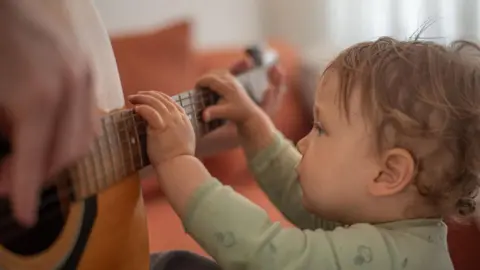
Osmotic Learning
"A great deal of the learning at the beginning here is rather acquired indirectly," stated the expert.
It's by means of this osmosis that the family are hoping the child will pick up the UK customs they wish to cultivate.
The consultant said the tutor must be somebody who studied at "the appropriate educational institutions – the same kinds of schools as the family plan to send their son to".
"The instructor simply needs to be the right kind of person, they'll be performing things they don't even know they're doing, simply by nature," he said.
Expense Not a Factor
The family told Adam the selected educator should preferably also have familiarity of or enthusiasm in equestrian activities, winter sports, creative fields and musical activities so as to inspire the child in a wide range of hobbies.
Furthermore though, he stated the family wanted the tutor to register the child on a variety of classes so the child would be "horseback riding and starting an musical instrument by the time they are about three years old".
In the family's perspective, guiding their son develop into a "UK sophisticate" will result in success and open doors.
"Considering the pros and cons of that, because it's definitely a status symbol," he comments.
However, in spite of all this instruction in "English culture", could the child absorb alleged cultural influence from the international family he is raised by anyway?
"Absolutely", said the CEO. "They understand this may not work, but they've simply adopted the attitude of, 'we should try and we'll proceed as soon as we can', because the price of it is irrelevant," he said.
Impractical
There are some in the education sector who have similar reservations.
Another CEO, chief executive of an educational organization, who supplies private tutors, wrote that "the process of adopting dual cultures, or indeed, forming one's identity, is something that must be experienced personally, not manufactured."
He wrote that he had emigrated from Asia to the UK at the time of childhood, and had been educated knowing and embodying dual heritages. He continued to study at the University of Cambridge.
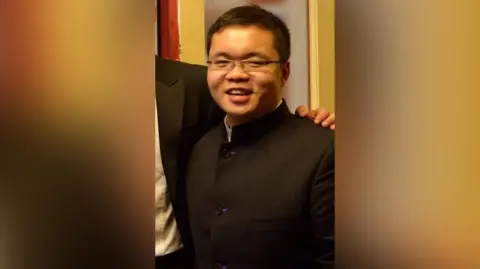
"The idea that a single person can function as a living vessel of Britishness, a person who can in some way impart the attributes of a English gentleman onto a one-year-old child, seems to me optimistic and unrealistic," he stated.
"In my experience, engaging a quintessentially UK tutor from infancy will not instantly create the outcome they hope for.
"I did not have such a tutor, and however I have been fortunate enough to enjoy many of the experiences they desire for their son."
He stated: "The fact is, self-identity cannot be dictated from the outside influences; it must be selected, and it must originate internally."
Purchasing UK Culture
Of course, UK identity is something the expert thinks can be instructed – and marketed.
"I think the fact that the world regards us in this regard is something that we should be cherishing|valuing|appreciating


